
Picture Time
On Painting, Time, Henri Bergson, and Roger White

Humans want to see time, to give it shape. We imagine time as a relentless force.
We bargain with it and race against it, and as the visual beings we are, we want to look our rival in the eye. We want to transform this abstract idea into reality so that we might heal our endless anxiety about the future.
Science views time through physics. Newton described it as a container and Einstein folded it into space. Time is measured in observable movement—a day is a turn of the earth; a year, an orbit around the sun.
For millennia, time has been a circle— the wheel of samsara, the Maya calendar, Nietzsche’s eternal return.
The sundial materialized this. The clock mechanized it. The watch bound it to our bodies. We even named it “watch” because wherever we go, we keep our gaze fixed upon the second hand as it ticks away our lives.
The most common image of time is the simplest: a straight line. Invented in 1765, the timeline is a track in a single direction.
Soon came synchronized times and the age of punctuality began: time zones, railroad time, consensual time.
In a famous debate with Einstein, the philosopher Henri Bergson rejected the whole paradigm of spatial time for an intuitive temporal experience. True time, he said, can only be accessed through introspection, and he called this phenomenon “duration.” Duration is the time produced by humans, ratherthan observed by them—a creative force, not a metric.
Bergson lost the debate, so we live in Einstein time, but he inspired many artists with his ideas, most notably Marcel Proust, whose In Search of Lost Time was an opus of duration.
Humans are aware of our personal time. We are morning larks, night owls, nostalgics, worrywarts. Can you believe a whole year has already passed? I thought that week would never end.
Bergson believed that if we come to know our own duration, we become filled with genius and produce something truly new.
Paint Time
Marcel Duchamp’s Nude Descending a Staircase illustrated space time by recalling the blurry, time-lapsed images of chronophotography. But most art expresses time in less literal terms.
Unlike space time, which can be shown in symbols, duration cannot be reduced
to a universal image and all art contains its own duration.
Literature invents its own relationship to time. Writers bend the pacing of plot to suit the needs of their ideas. Jorge Luis Borges saw his work as inventing “an infinite series of times ... parallel times ... a network of times.”
The filmmaker Chantal Akerman spoke of wanting to capture “the physical experience of time unfolding inside you.”
The interdisciplinary artist Dieter Roth spoke of using his work to record “a moment that endures ... that remains embedded and suspended in time.”
Art objects appear static, although we know they are not. Perhaps this is why fine art prioritizes timelessness, while fashion, film, and pop music emphasize trends and technology.
Timelessness is unreal but it is a suspension of disbelief that allows painting to invent new temporal possibilities. This is the enchantment of picture time.
Anyone who has ever lived with art knows how paint reveals itself over time. Every hour and mood transforms the work. After years of looking, a fresh shadow appears beneath a foot. The paint cracks like aged skin, offering its color back to the sun.
Some paintings explode on first look; others enter the eyes in an instant but remain quietly hanging in the mind for weeks, releasing their potency in a slow drip.
A work may take twenty years before a viewer is ready to receive it. Each artwork and viewer form their own temporal relationship.
Present Time
For me, duration is among of the great sensations of art. A good picture activates our sense of sight, space, body, and time. It dissolves the linear, circular diagrams and presents us with a direct metaphysical experience.
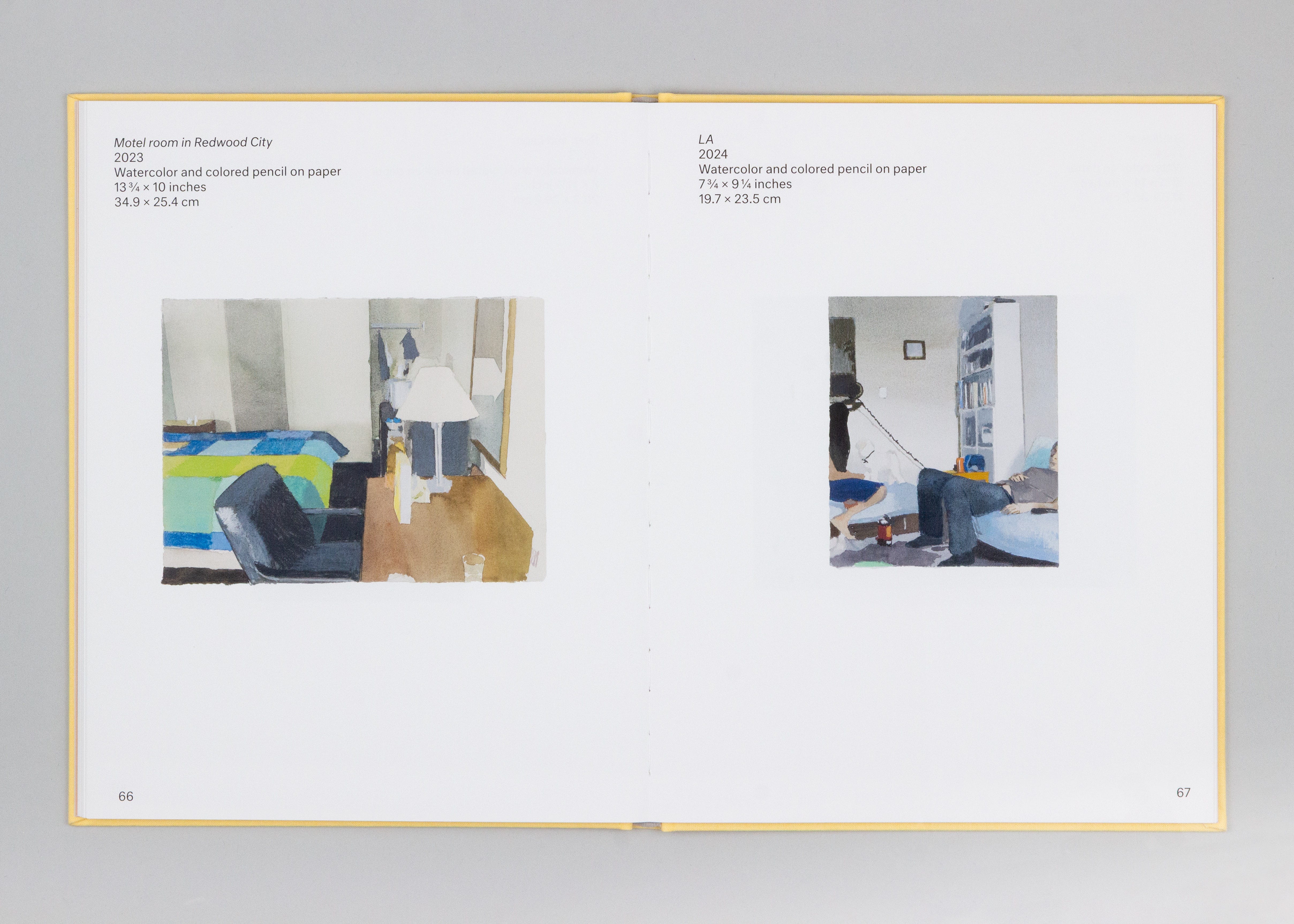
Roger White is a painter of duration. Through the classic forms—landscapes, still lifes, domestic scenes—he offers a doorway into the passage of time. When I look at his pictures, the clock fades away and I discover the rate of my nervous system.
There is no drama in these paintings. Emotional stimulation blurs time: on bad days, time drags, and on good ones it flies. For an artist, time speeds up when work is going well and stagnates when inspiration flags. The same could be said for viewing art. A bad film lasts forever.
Of course, a life free of conflict is neither possible nor desirable, but when art like White’s offers a respite from drama, we are given the opportunity to see beyond our mood, beyond the mechanical clock and peer into our own duration.
In spiritual practices, it is sacred to commune with time. Some call it “the now” or “God.” A seeker might reach for this communion through prayer or meditation and when she arrives there, it is said that she discovers the apotheosis of consciousness.
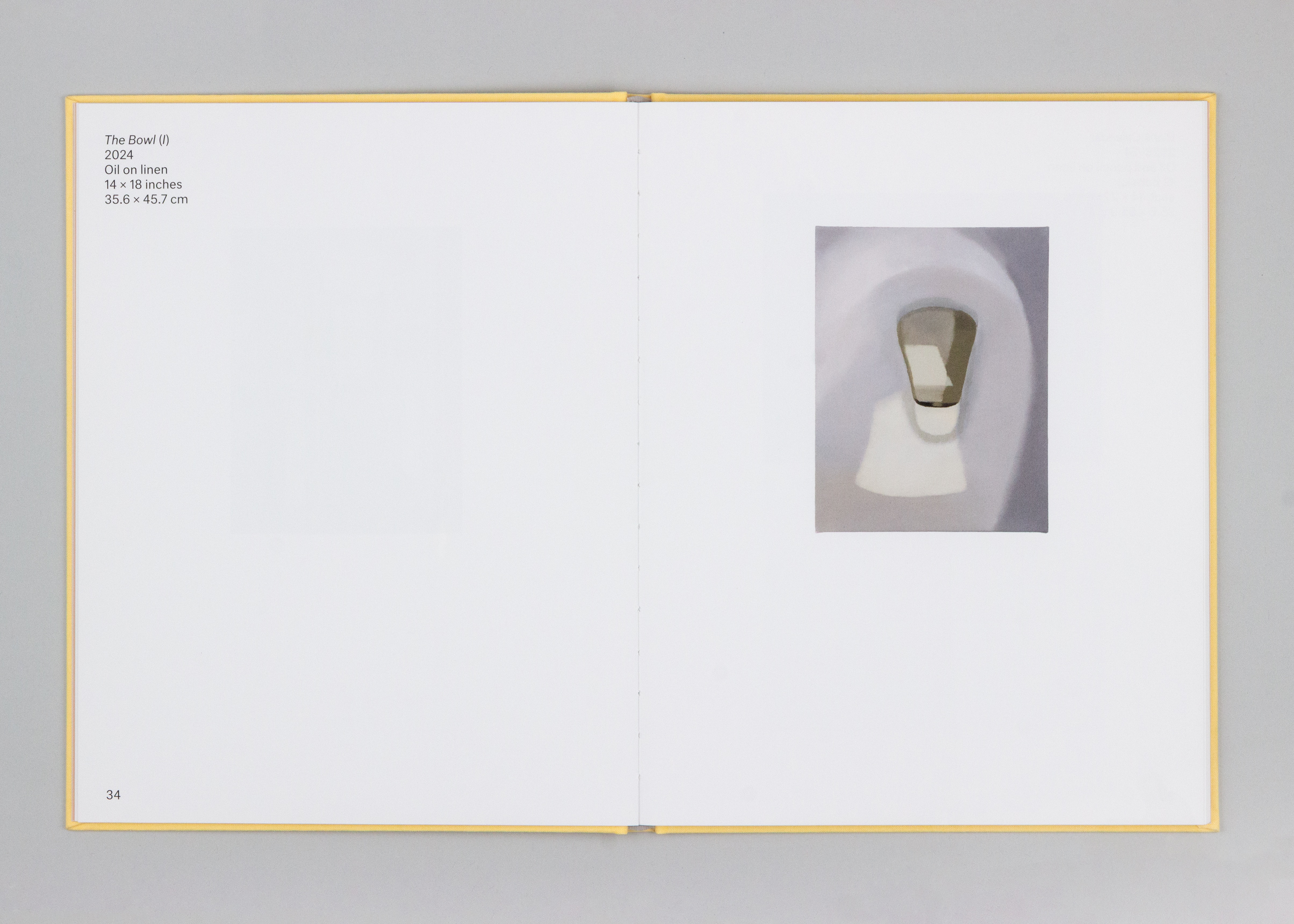
White gives the viewer glimpses of this awareness through objects so unremarkable they seem to bypass stimulation—a Brita water jug, a toilet bowl. He calls this the “presence” of painting.
Presence is a challenging state. There’s immediate pleasure in stimulation and distraction, but presence is a more subtle phenomenon. People who want to deeply connect with the present move to mountaintops and monasteries. They spend years sloughing off emotional noise and perceptual ticks.
Truly knowing time, or anything or anyone, is complex. An art experience of time is no different.
When I look at one of Roger White’s watercolors—a sprawling urban landscape
in the late afternoon—I somehow feel resentment, melancholy, clarity, and wonder all at once. It’s a little overwhelming, but along with all these feelings, White offers the sublime. The beauty of the world can save
us from ourselves.
Hand Time
Time is a fundamental medium for artists. Some pictures take years to create, some
seconds. A line can be drawn in a swipe or a drag. A mark in space is a mark in time.
The tempo of perceiving a painting might come from the pace of its creation: a Joan Mitchell flings itself at me; an Agnes Martin draws me in; a Helen Frankenthaler pours into my eyes.
The vocation of painting is also a game of time. “There’s never enough time to paint,” White says, “I hate that I wish I had more time to paint.”
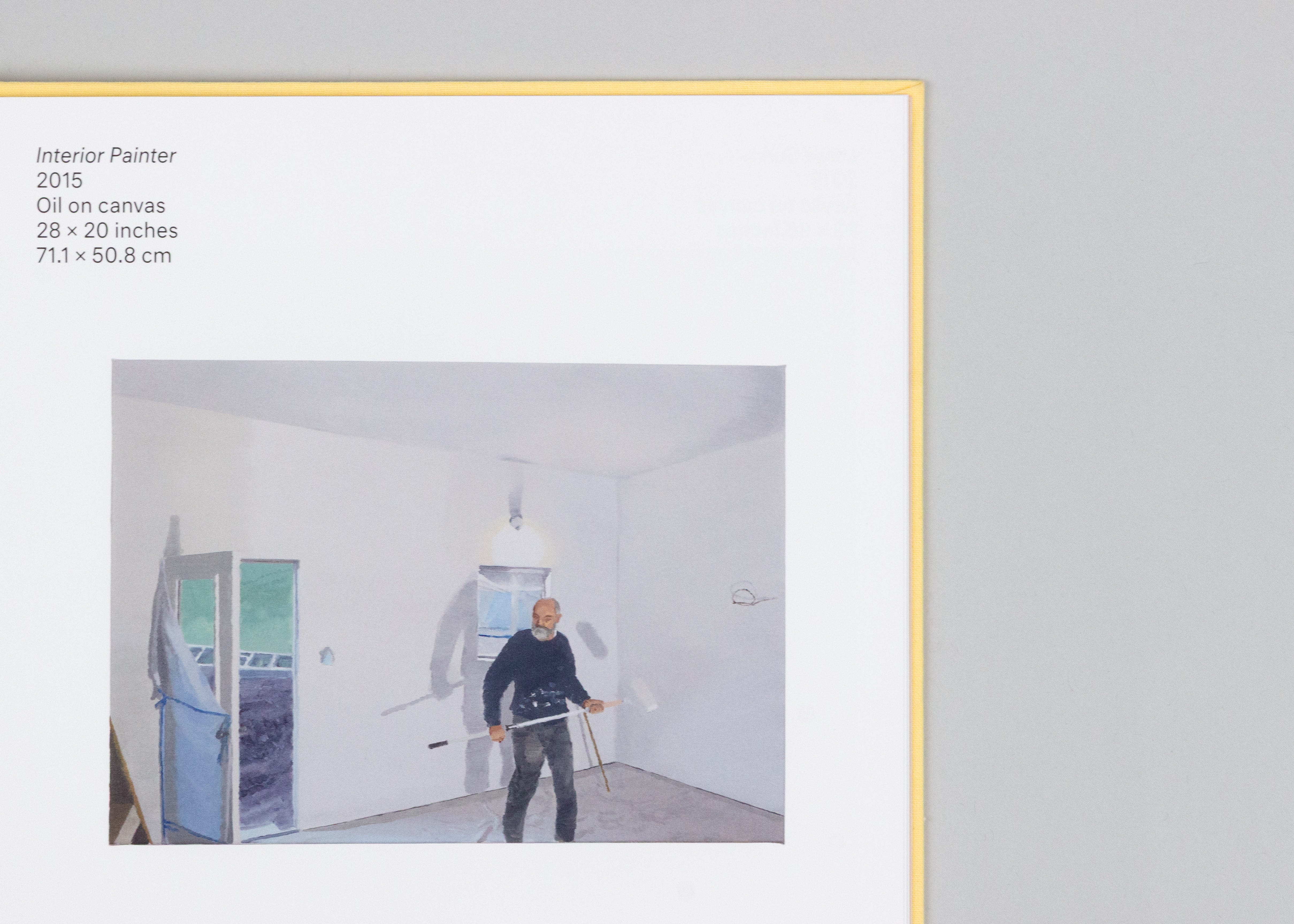
A “productive” artist uses time for production, but some painting requires hours of staring. And each medium has its temporal necessities. Tempera dries quickly. Terracota crumbles. Bronze lives forever. Roger White chooses slow-drying mediums: oil paint is a waiting game and watercolor is an evaporating puddle.
“I remember seeing a show of portraits by Hans Memling at the Frick,” White says, “and thinking that there is not enough time in the modern world for someone to paint even one finger of one of these Flemish bankers. The entire structure of our experience is so radically different.”
Ultimately, what humans desire is not more minutes, but the feeling that we used our time well. We did the best we could with the time we had.
All Time
White’s mention of Memling invokes another category: historical time. Lineage, influence— these are sticky subjects for artists.
White works in the history of luminous painters: Caravaggio, Vermeer, Turner,
Yuskavage. Like them, he makes sunlight from paint.
He paints portraits of the sun, the ancient clock that helps to set our circadian rhythms. Most still life painting is a portrait of the sun. A bowl of cherries allows me to feel the sun as it inches across the sky. It brings me to the present, where I am neither rushing nor waiting, only growing aware of my awareness.
I am experiencing the moment while forming a memory of the moment at the same time. This is how Bergson described déjà vu.
White Time
For me, White’s calendar paintings are experiments with time. He depicts the diagram of modern time: the Gregorian calendar. It is a grid, intended to be read like a letter: left to right, top to bottom.
He stretches us into speculative time by creating years from the future—2049, 2086, 2027. He embeds abstract paintings inside the calendars themselves, creating paintings within paintings, times within times.
The more I consider White’s work through time, the more I see it in his fundamental impulse as an artist. His mirror paintings, his empty rooms, his studies of plastic packaging.
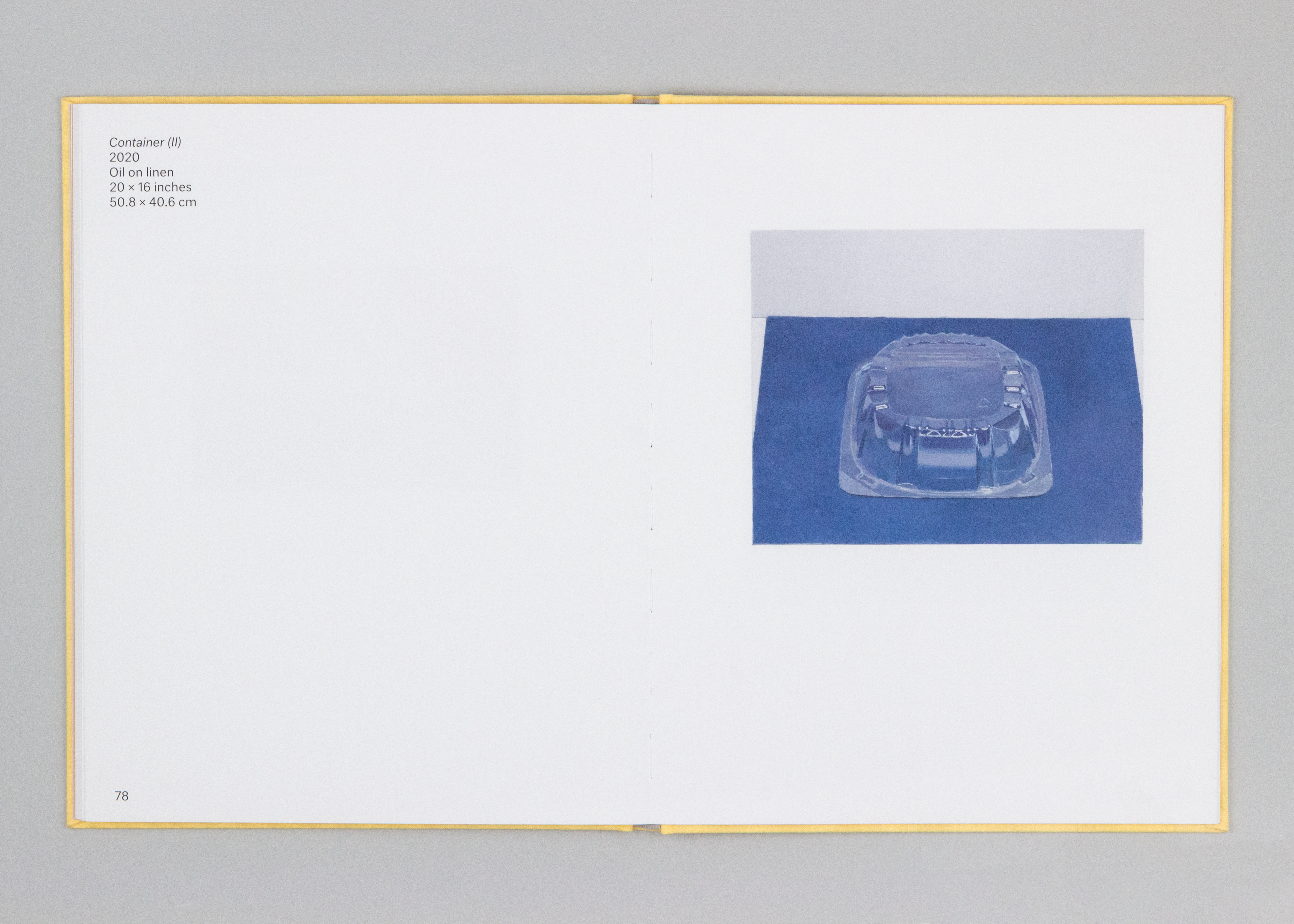
“When I talk about the plastic container paintings,” White says, “I mention that there are lots of implicit time scales: the time it takes to make the object, the time it takes to use it, the time it takes me to make the painting, a duration that the object exists,
a duration that the painting exists ... my most didactic works.”
Indeed, humans need new ways of perceiving time. Plastic is made from prehistoric fossils, a time too distant for the average person to understand. As far as we know, it may never decompose, and yet every day we casually fling chunks of it into landfills.
We can’t conceptualize this lifespan. It’s an abstract number, an intellectual concept, and we cannot see it. It is this limit of human imagination that can harm us.
When Mick Jagger sings, “time is on my side,” he taunts his listeners in the voice of the devil, because time is not on the side of humans. We remain forever caught up in its drama.
Somehow, painting—this ancient and simple desire—can reveal time. It can alter
our temporal reality. It can make us feel time in ways we could never logically understand. In a picture, we can feel what has always been.
This essay appears in thew new book, The Pedestrian, on the work of Roger White. Order here.